

I was in Taiwan recently for a week, and one thing kept catching my eye: how many travellers were carrying film cameras. Out of everyone I saw with a camera around their neck, I'd guess at least half were shooting film. It caught me off guard. A few years ago that ratio would have been unthinkable.
It's not just photography. Paper book sales keep beating the projections that said ebooks would have killed them by now, and some of my friends mentioned they've started keeping a journal again, the proper kind with a leather cover and dated entries that actually get filled in. Something is happening, and it's not subtle anymore.
Call it digital minimalism, call it analogue revival, call it just being tired of screens. People are pulling back in a way that would have sounded eccentric a few years ago and now sounds reasonable. What stands out the most to me is the speed. This isn't a slow drift, it's a movement gathering pace each month. CNN reported recently that around 210 million ‘dumbphones’ were sold globally last year, with a fast-growing premium niche in Europe and North America driven by people deliberately stepping back from smartphones.
The why is easier to explain than it used to be. Burnout is part of it, but attention fragmentation is the bigger part. Gloria Mark, who's been studying digital attention at UC Irvine for over twenty years, has measured the shift. Back in 2004, the average attention span on a single screen was about two and a half minutes. Today her tracking puts it at roughly 47 seconds. We're flicking between things so fast we've stopped noticing, and it chews through more energy than anyone realised. So people are opting out where they can. Some are deleting apps. Some are buying flip phones. Some are picking up notebooks because writing by hand is one of the few activities a screen hasn't found a way to interrupt yet.
My Own Move Away From the Screen
I'd never been all that heavy on social media to begin with, but there's a difference between not using it much and not having it on your phone at all, and I wanted to feel that difference. So I deleted the apps. For me, the bigger driver was mood, more than screen time. As they say, comparison is the thief of joy, and social media is hard to use without drawing comparisons even when you don't mean to. Removing the apps removed the trigger, and that felt good enough that I wanted to push further.
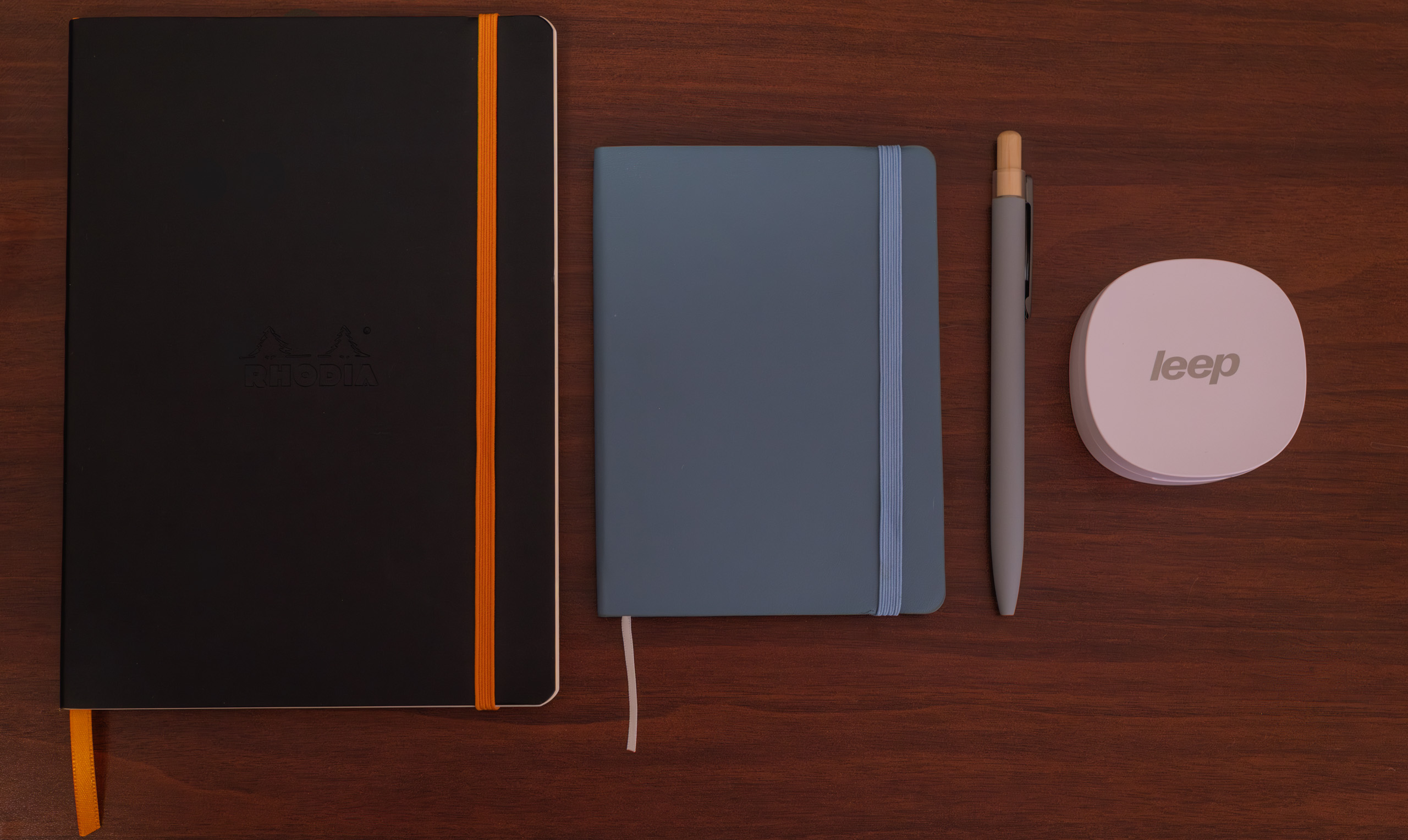
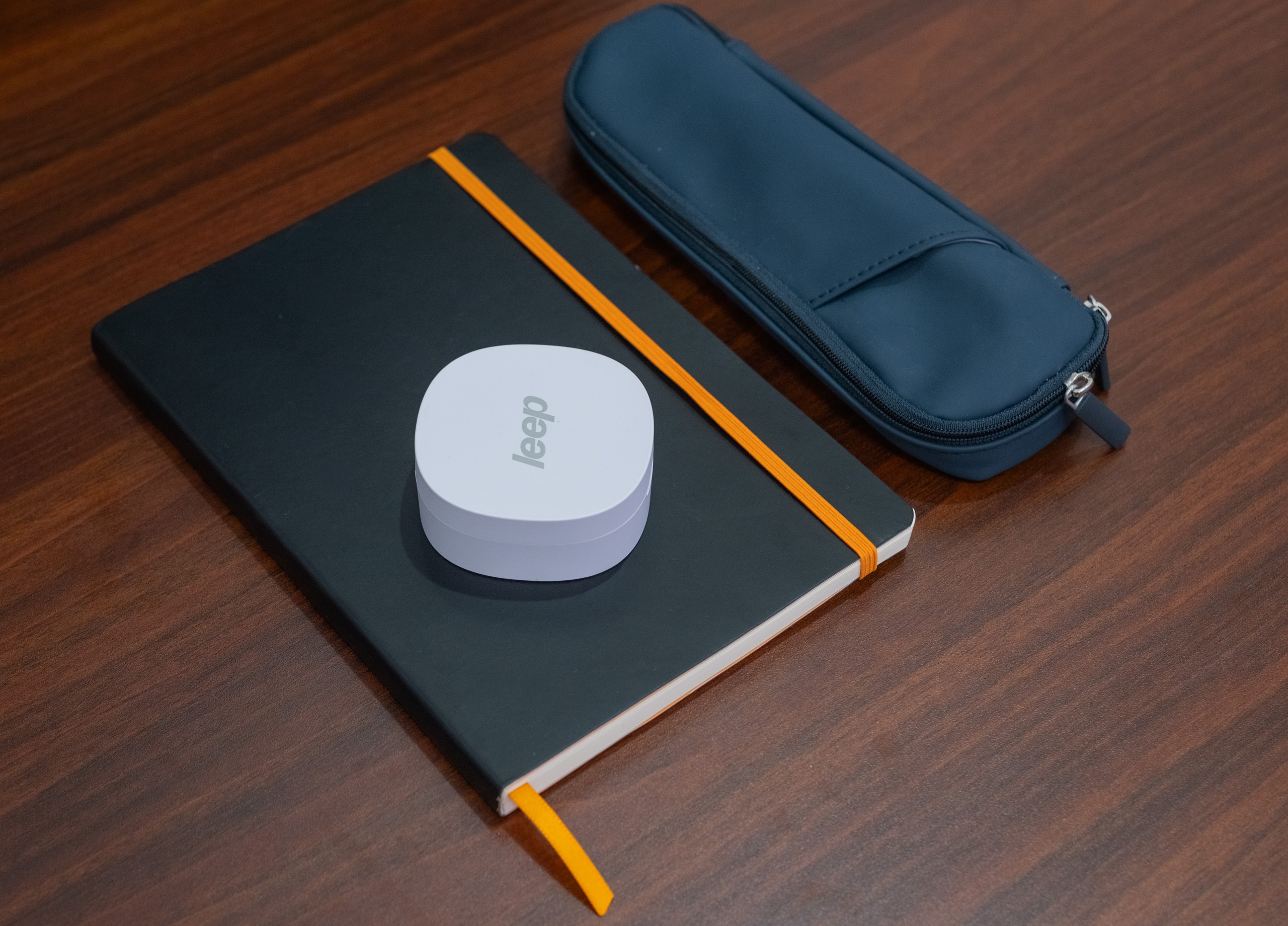
I started journalling by hand to track my moods and understand what I was feeling, rather than letting the day blur past. As I write this, there are four notebooks on my desk right now, each for something different. I also went to a bookshop one Saturday and bought a stack of paperbacks instead of reaching for my Kindle. The difference between the two reading experiences was bigger than I'd remembered.
Then I looked at my wrist. The Apple Watch I’ve worn regularly for years was effectively an extension of my phone, the same loop of notifications and glances in a different shape. If I was serious about the rest of this, the watch had to go too.
The Watch Was the Hardest Thing to Give Up
Giving up the social apps had been the easy part, surprisingly. Taking off my watch was the shift I struggled with. I'd bought it for the right reasons, mostly step counts and sleep data, but I hadn't accounted for how aggressively it would pull me back into the same attention loop I was trying to escape. Notifications continue to tap my wrist, and even after I'd gone deep into the Watch app and switched almost everything off, a few would regularly slip through. A message preview here, a low battery alert there, each tiny on its own but together keeping my brain in the same checking-and-reacting rhythm I was working to break.
However, the worst part wasn't the notifications I'd allowed, it was the ones I hadn't. I'd catch myself glancing at the watch for no reason, just to see if anything had come in. A small twitch of the wrist and a quick glance down, then back to whatever I'd been doing, except my head wasn't there anymore. Mark's research found that once you're pulled away from a task, it takes about 25 and a half minutes on average to fully return to it, with a couple of unrelated tasks typically slipping in along the way. I was paying that cost dozens of times a day for nothing.
Switching to a Watch That Just Tells the Time
So I bought an affordable analogue watch. Nothing fancy (it turns out many watches are very expensive!). Time and date - that’s all. The kind I wore as a child in the mid 2000s.
I realised almost instantly that I could focus better. After a few weeks, I had no urge to glance every ten minutes. I'd thought I would miss the smart features, but I missed almost none of them. The fitness rings I'd been chasing and the standing reminders I'd come to ignore both slid away without leaving much of a gap. So did the watchface I'd spent weeks (perhaps longer) tweaking. There was one thing I couldn't replace, though, and it is very important to me.
I missed the data.
The Tracking Dilemma
Here's the thing nobody warned me about. You can give up your smart watch and feel better instantly. You can also give up the ability to look back at the last month and notice that you slept badly every Tuesday, or that your step count drops every time the weather turns, or that you're going to bed later than you think you are. That information isn't life-changing on any given day. But over weeks and months, it's useful. It tells you things about yourself you'd otherwise miss. In my case it certainly did.
The dilemma is that almost every device built to capture that data is also built to demand your attention. Watches buzz and phones beep. The apps behind both want you opening them daily so they can show you a new metric and serve you a new graph. Tracking and distraction come in the same box, and the apps are designed that way on purpose.
What I wanted was the opposite. Tracking that ran in the background. Data I could look at when I chose to look, and ignore when I didn't. No badges or streaks, no haptic reminder telling me to breathe. Something that respected the fact that I was trying to use less tech.
Where Smart Rings Come In
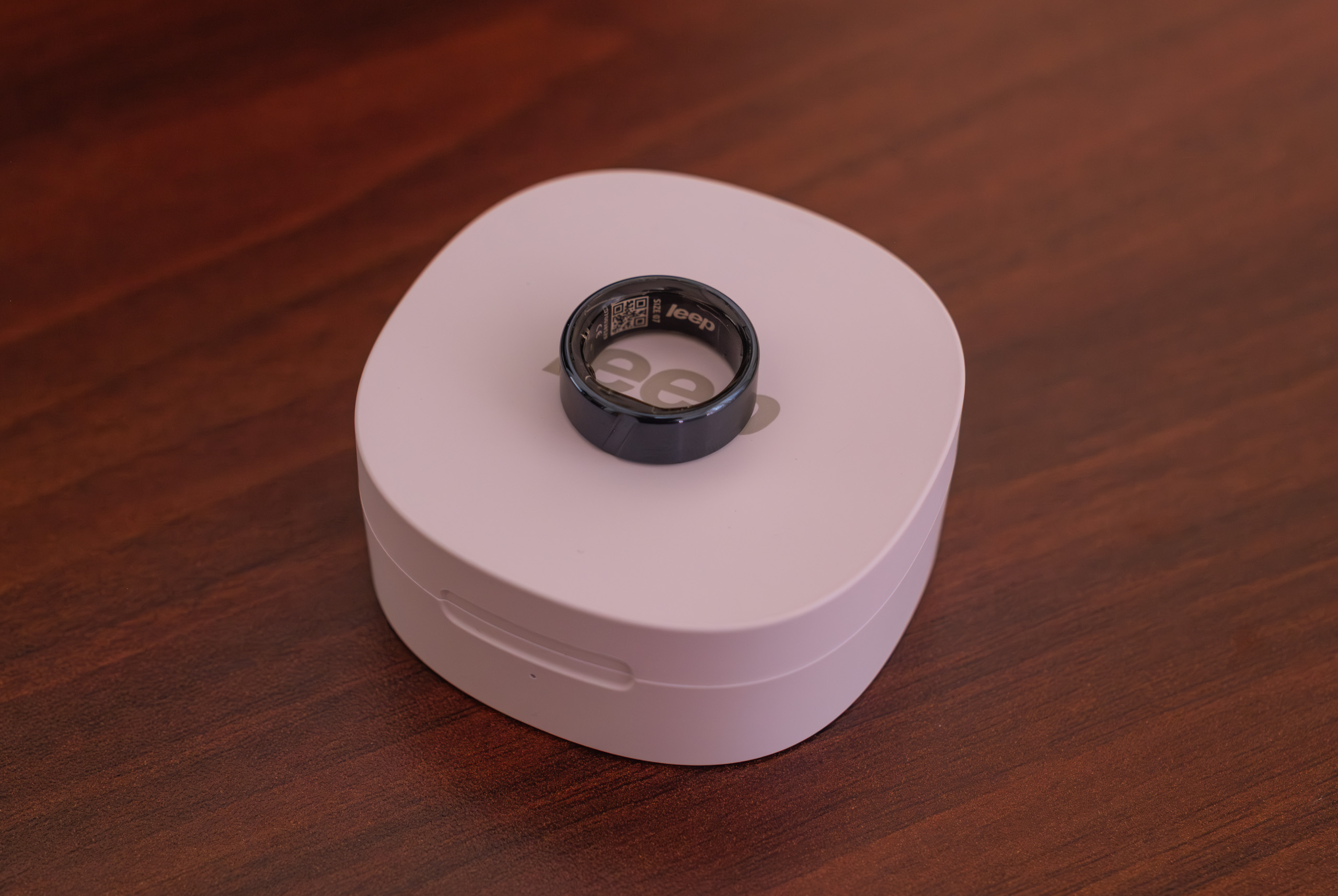
This is where the smart ring category turns out to be a real find for anyone in the same boat. A ring has no screen, so there's nothing to glance at. It has no notifications, so it can't tap you on the wrist or show you a message preview. It doesn't pulse when someone likes a post. It just collects data and gets out of the way.
The whole logic of a ring as a wearable is the opposite of how a watch works. A watch is a display first and a sensor second. A ring is a sensor with no display at all. That changes everything about how it sits in your life. You put it on and you forget it's there, which is the closest a piece of tech can get to vanishing.
For someone deep in a digital declutter, that absence is the primary feature.
Why Leep Fits the Way I'm Trying to Live
I've been wearing my Leep ring, the Midnight Blue, for a few weeks now and the thing that strikes me most is how little of a presence it has. It's slim, lighter than I expected, and I usually forget it’s there. That sounds like faint praise but in this context it's the highest compliment a wearable can earn. A few things about Leep specifically make it work for this kind of life.
There's no subscription, which is more important than it sounds because subscriptions encourage apps to nag you so you don't cancel. A pay-once model has no reason to do that, and the Leep app reflects it. It's calm. It doesn't ping me for engagement. I open it when I want to, see what I asked for, and close it again.
Battery life is the next thing that matters more than people give it credit for. Around eight days on the ring and over sixty in the case, which means charging is something I do once a week, often on a Sunday evening, while I read. It's not a daily ritual that pulls me back to a device. Other wearables I've had needed nightly or bi-daily charging, and the whole loop of "where's the charger, plug it in, take it off, forget it, plug it back in in the morning" turned into its own little anxiety.
Furthermore, the build is durable in a way that means I forget it's even at risk. Titanium shell, water resistant to fifty metres. I don't take it off to shower or swim, which means I don't have to think about it. To be fair, the Apple Watch shared many of these traits, but it was also a device that I tried very carefully not to scratch. If I was working the garden, for example, I would take it off to keep it looking pretty. That’s not something I worry about with a ring.
The phrase that keeps coming to mind when I describe Leep to friends is tech that fits your life rather than tech that demands attention. It's the most honest summary I've got of why it works for me.
How I'm Actually Using It
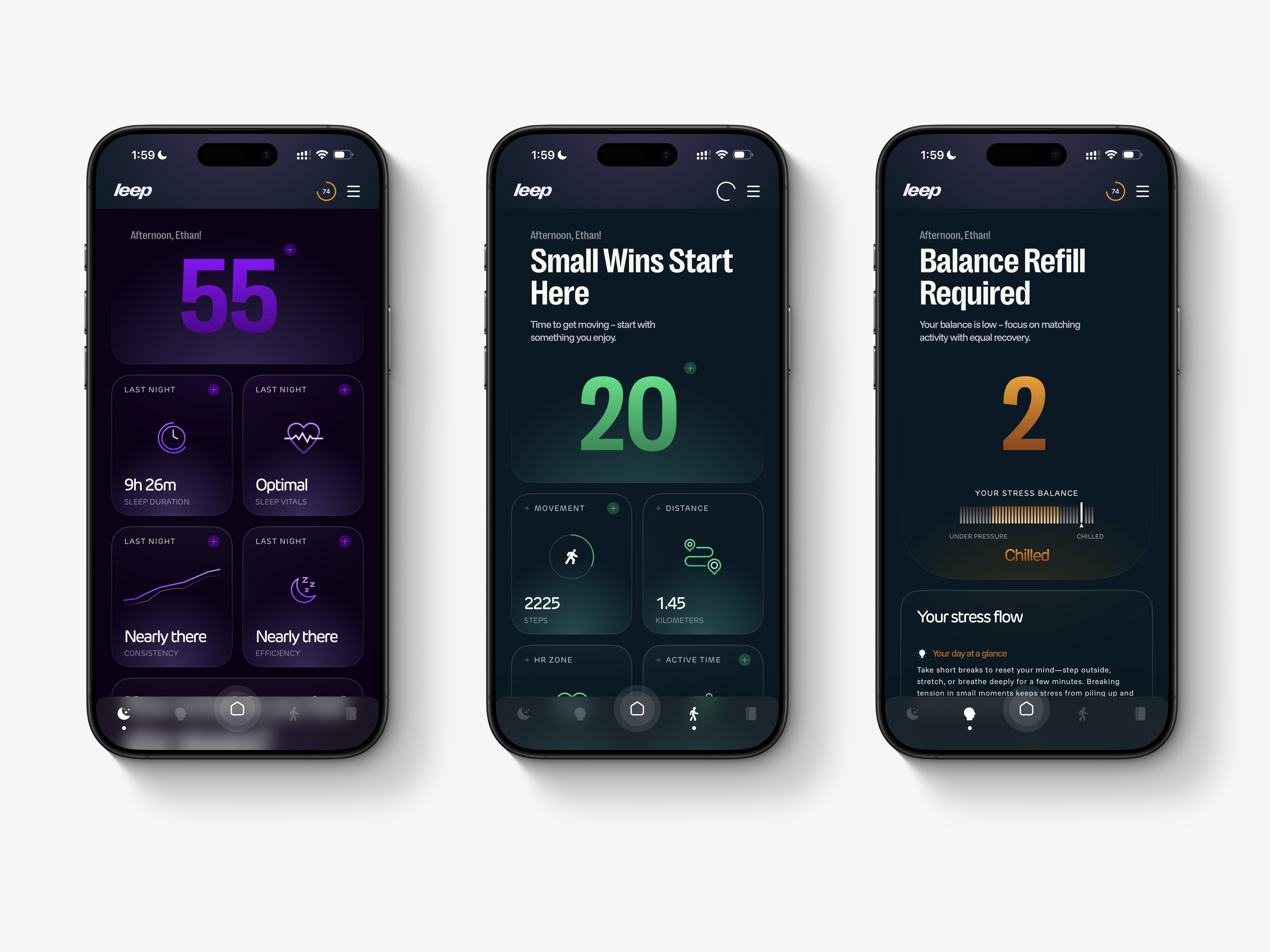
The way I use Leep is, by design, boring. I don't open the app most days. I don't check my readiness score before breakfast or compare last night's sleep to last week's. The ring sits there. It collects.
Once a week (sometimes even less frequently), I sit down for ten minutes and look at the trends. How was my sleep across the week? Are my steps consistent or did one bad day drag the average down? Did anything stick out, a poor night or an odd pattern in the readings? That weekly check-in is the entire relationship I have with my health data, and it's enough. I get the benefit of tracking without the cost of being interrupted by it.
The trends are more useful than any single day's metric anyway. A bad sleep on a Tuesday doesn't mean much. A week of poor sleep tells me my routine is slipping. The patterns are where the value sits, and the weekly view is the right window for spotting them.
Tech That Earns Its Place on Your Body
Most wearable tech is designed to keep you engaged because engagement is the business. Leep, and the smart ring category in general, points at a different idea. Tracking can be quiet, and health data can be useful without being pushy. A device can earn its place on your body by doing one job well and then politely vanishing.
I don't know whether the rest of the wearables industry will follow. Watches still buzz and apps still nag. Most of the money in the category still comes from keeping people glued to a screen. But a category exists now that doesn't work that way.
My Leep ring is on my finger as I write this. I haven't thought about it once today (well, that’s a lie, I’m thinking about it now, but I hope you get my point).
