
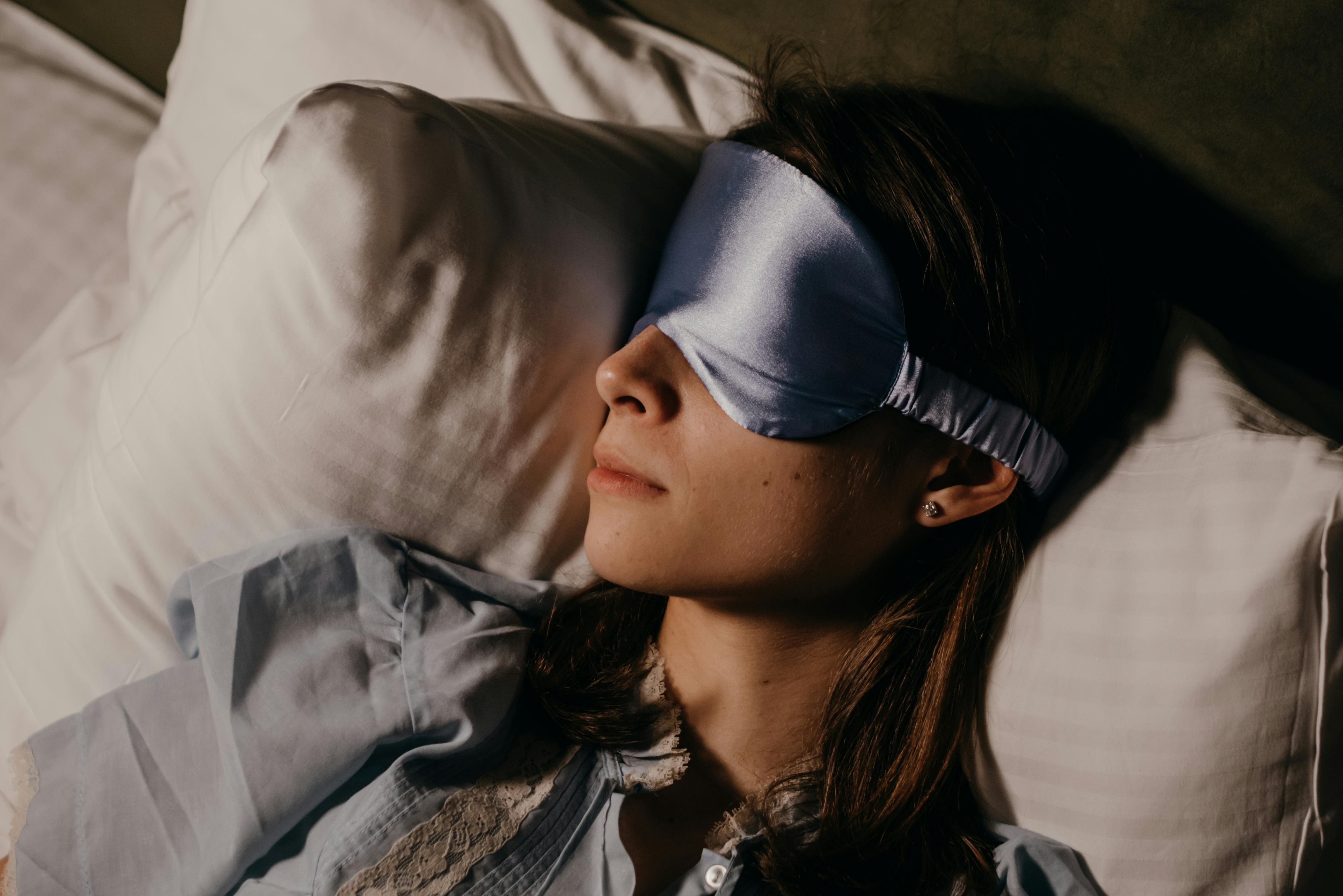

It's the question every tired person asks after a late night, or three. Can you ever catch up on lost sleep? And does a long weekend lie-in actually undo the damage from the week?
The short version is that you can claw back some of what you lose after a couple of rough nights, but only some of it. Chronic, week-after-week sleep loss is a different problem, and a much harder one to fix.
Sleep scientists have spent decades on this exact question. One of them, Professor Matthew Walker, a neuroscientist and psychologist at the University of California, Berkeley, has built much of his career around it. What they've found is more sobering than the old "I'll sleep when I'm dead" bravado suggests. Here's what the science actually says about sleep debt, and what you can do about it.
What is sleep debt?
Sleep debt is the build-up of effects from not getting enough sleep. Most adults need somewhere around seven to nine hours a night. Fall short of that on a regular basis and you start running a deficit, the same way an overdrawn account keeps slipping further into the red.
Walker splits it into two kinds.¹
- Short-term sleep debt, from one or two late nights.
- Long-term sleep debt, which builds when you sleep less than your body needs over weeks or months, sometimes years on end. This is the one that does lasting harm.
Recovery sleep helps, but only so far
After one or two bad nights, an earlier bedtime or a couple of longer sleeps will restore some of your lost mental sharpness. The catch is that the recovery is only ever partial, and it only works for short-term loss. Research shows it can take more than a week of solid, consistent sleep to bounce back from just a few days of heavy restriction.¹
A well-known study led by Dr David Dinges makes the point well. After three nights of recovery sleep, people who'd been sleep-restricted still hadn't returned to the performance levels they'd shown when sleeping a steady eight hours.¹ And none of them clawed back all the hours they had lost.
So a lie-in might leave you feeling brighter without resetting anything underneath. Some functions stay impaired even after the short-term kind of sleep debt. Holding your attention on a single task is one of the first to suffer.¹
Why sleep debt isn't like a bank loan
Walker often compares sleep debt to credit card debt, and the analogy holds up. With a normal loan, you can miss a few payments and clear the whole balance later in one lump sum. Sleep won't let you do that.
Chronic sleep debt behaves more like a high-interest card. The longer the balance sits there, the more interest it charges, except here the interest gets paid in physiological damage rather than money. Once the loss becomes ongoing, the amount of catch-up sleep you'd need climbs out of proportion to what you missed. And some of the harm, to your immune system, your thinking, your metabolism and your hormones, may never fully reverse, even with weeks of extra sleep.¹
Chronic sleep debt leaves a mark
Big population studies hint that millions of people spend years running below par, blaming stress or age when the real culprit is sleep.
Walker doesn't mince words here. He reckons it's unlikely anyone can get by on four or five hours a night and be fine.¹ Only around 1% of people are truly resilient to chronic sleep restriction across every measure of brain function, and your odds of being one of them are slimmer than your odds of being struck by lightning, which sit at roughly 1 in 12,000.¹
Part of what makes long-term sleep debt so sneaky is that you stop noticing it. The longer it drags on, the harder it gets to claw back, and the foggier version of you starts to feel normal.¹ Alertness drops and you adjust. Low energy turns into your baseline. The mental dulling creeps in slowly enough that you barely register it happening.
Why weekend lie-ins won't save you
Here's the pattern most of us fall into. You short-change yourself on sleep from Monday to Friday, then try to make it all back on Saturday and Sunday. Sleeping in does claw back a little, but it doesn't square the account, and it tends to make Monday's early alarm feel even crueller.
That back-and-forth creates something sleep researchers call social jet lag. Your body clock gets shoved out of sync, much like it would if you'd flown across a few time zones.¹
James Wilson, a sleep expert and Leep's Chief Sleep Officer, adds a nuance a lot of people miss. The thing anchoring your sleep schedule isn't bedtime at all. It's your wake-up time.
We can't simply command ourselves to fall asleep on cue, but we can decide when we get up. Keep that wake-up time steady and your brain learns to build sleep pressure at roughly the same hour every evening, which hands you a natural, predictable window to drift off in.
For most people a lie-in of up to an hour won't do much harm. Push past that and you start eating into your circadian rhythm and your sleep quality, and you'll feel it in your energy the following week. As Wilson puts it, "Consistency, not catch-up, is what protects you from sleep debt in the first place."²
There's also early research suggesting that erratic wake-up times and a scrambled body clock might interfere with blood flow and metabolic activity in major organs, the kidneys among them.³ Your sleep-wake cycle, then, shapes a lot more than how rested you feel in the morning. It reaches into how the whole body runs, right down to individual organs.³
Do naps help?
Naps help, within limits. They're a useful top-up, not a stand-in for a proper night's sleep.
Walker's rules of thumb are still the ones to follow. Keep naps to about 20 minutes, steer clear of napping after 3pm, and don't let them become a substitute for the sleep you should be getting at night.¹
Wilson adds a small fix that catches a lot of people out. Set the alarm for 30 minutes rather than 20. Most of us need five to ten minutes to actually drop off, so a 30-minute window leaves you with the roughly 20 minutes of real sleep you were aiming for.²
So, can you catch up on sleep debt?
After a short stretch of bad sleep, partly. You'll recover some of what you lost, though rarely all of it. Chronic sleep debt is the stubborn one. Most of its physical toll won't be undone by extra naps or supplements, and definitely not by willpower. No pill or gadget swaps in for sleep, and neither does any clever workaround. Physiology doesn't take bribes.
Which leaves the unglamorous answer. The sleep that protects you is the sleep you get tonight, and the night after that, not the sleep you keep promising to make up later. Get as much of it as your life allows. That's the whole game.
Common questions about sleep debt
Can you catch up on lost sleep? Partly. After one or two late nights, extra sleep restores some of your lost focus and alertness, though usually not all of it. Chronic sleep debt, built over weeks or months, is much harder to repay, and some of its effects on the body may not fully reverse.
How long does it take to recover from sleep debt? Longer than you'd expect. Studies suggest it can take more than a week of consistent, healthy sleep to recover from just a few days of heavy restriction, and even then the recovery is only partial.¹
Do weekend lie-ins fix sleep debt? Not fully. Sleeping in on weekends claws back a little lost sleep, but it pushes your body clock out of sync, a pattern called social jet lag, and tends to make Monday mornings harder. Consistent wake-up times protect you better than weekend catch-ups.
How long should a nap be? Aim for about 20 minutes of actual sleep. Walker recommends keeping naps short and avoiding them after 3pm.¹ Wilson suggests setting a 30-minute alarm, since most people need five to ten minutes to fall asleep first.²
What's the difference between acute and chronic sleep debt? Acute, or short-term, sleep debt comes from one or two late nights and can be partly recovered. Chronic, or long-term, sleep debt builds up when you under-sleep for weeks or months, and it's far harder to undo.¹
References
- Walker, M. (2017). Why We Sleep: Unlocking the Power of Sleep and Dreams. Scribner.
- Wilson, J. Kipometer; The Sleep Geek.
- Chen X, Zhang W, Gu Y, Huang S. Circadian clocks and their role in kidney and eye diseases across organ systems. Front Physiol. 2025;16:1583502.
