
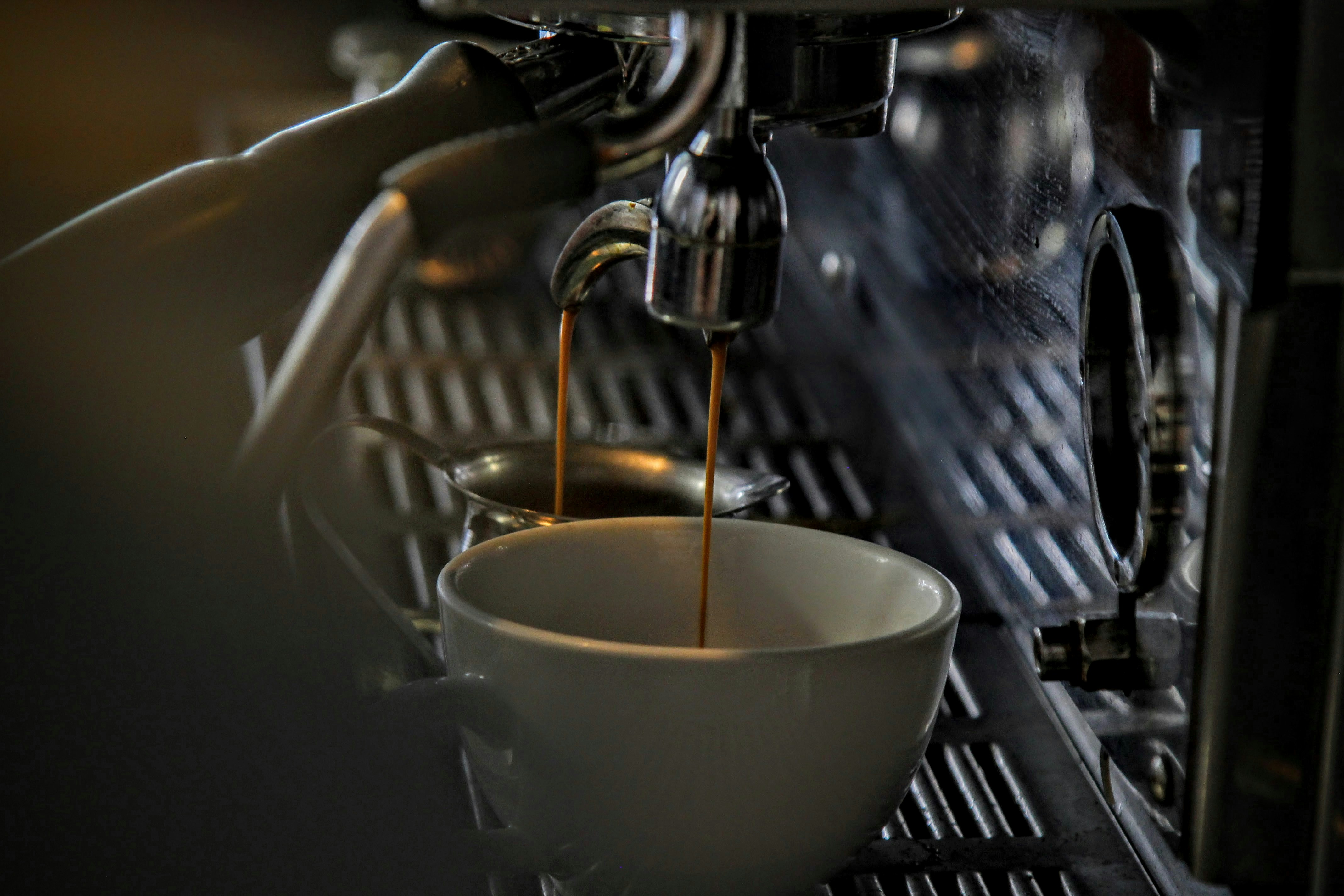

I drink a lot of coffee. Probably too much. Two to three cups most days, occasionally four, and a good chunk of that lands in the early afternoon. Not because I'm dragging and need a lift. I just like it the feeling of having a cofee. There's something about a warm cup next to the keyboard while I'm working, or reading, or a few hours into a game, that I find relaxing. The taste, the ritual, the small pause it builds into the day. Coffee at 2pm was never about staying awake for me. It was about enjoying the coffee.
So I didn't think much of it until my Leep ring started making the same point over and over. On nights after a late cup, my sleep looked worse. Not dramatically and not every single time, but the pattern held. Lower deep sleep. A resting heart rate that sat higher than it should. Morning readiness that came back a notch flat even when I'd been in bed for eight hours. I wasn't lying awake staring at the ceiling, so the connection wasn't obvious at first. The numbers just kept nudging me toward the same suspect, and eventually I went looking for why.
What I found reframed how I think about that afternoon cup.
Half-life is the number we often forget
Caffeine has a half-life of roughly five hours in a healthy adult. That's the time your body needs to clear half of what you drank. The range is wide, somewhere between about 1.5 and 9.5 hours depending on your biology, but five is the number is a good point of reference.
Here's the part that gets most people. Half-life isn't a countdown to zero. It's a halving, and then another halving, and so on. Say a cup of coffee gives me around 120mg of caffeine, which is normal for a decent 8oz brew. Five hours later, about 60mg is still circulating. Ten hours later, 30mg. If I have that cup at 4pm and I'm in bed by 11, roughly seven hours have passed, which means close to 40% of the dose is still active in my body at lights out. That's the equivalent of downing half a fresh coffee as I climb into bed and expecting to sleep normally.
Once I did that math on my own habits, the ring data stopped looking so mysterious and began to make sense.
Why I felt fine and slept badly anyway
The thing that fooled me for years is that afternoon coffee never made me feel wired (actually, I barely feel this from coffee in general). No racing heart, no jittery hands, no lying awake. I'd drop off fine. At least, I thought so.
Caffeine works by blocking adenosine, the molecule that builds up in your brain the longer you're awake and slowly cranks up the pressure to sleep. Caffeine slots into the same receptors adenosine uses, sits there without switching them on, and stops adenosine from delivering its message. Your sleep pressure is still building underneath. You just can't feel it, because the signal's been jammed.
So falling asleep easily tells you almost nothing. You can drop off at a normal time and still have caffeine quietly interfering with the machinery once you're under. And the part it interferes with most is the deep stuff. Studies using brain-wave recordings show caffeine suppresses slow-wave activity, the low, slow rhythms of your deepest, most restorative sleep. Even 100mg, roughly a modest cup, flattens that activity in the first cycle of the night. A 2025 Oxford trial went further and found that a single cup taken eight hours before bed can measurably cut deep sleep without the person ever noticing a difference.
My ring was catching something my own body was happy to ignore.
What the timing studies actually found
The Drake study from 2013 is the one everyone cites, and for good reason. Researchers gave people 400mg of caffeine, about two strong cups, at three different points: right at bedtime, three hours before, and six hours before. Even the six-hours-before dose cut total sleep time by more than an hour compared to a placebo. Six hours. That's a coffee at 5pm hitting an 11pm bedtime.
A bigger 2023 review pulled together 24 studies to pin down a cut-off time. Averaged out, caffeine trimmed total sleep time by about 45 minutes, dropped sleep efficiency by 7%, added minutes to how long people took to fall asleep, and shifted the balance of the night toward light sleep and away from deep sleep. Their practical takeaway: a normal coffee, around 107mg, should ideally be your last one about 8.8 hours before bed. A strong pre-workout dose, closer to 217mg, they pushed out past 13 hours.
Eight-plus hours before bed. If I'm asleep at 11, that's a hard stop around 2 or 3 in the afternoon. Which is exactly when I'd normally be reaching for another cup.
Why my friend can have espresso after dinner and I can't
Before you take those numbers as gospel, there's a big personal variable, and it explains why blanket advice about coffee always felt off to me. One enzyme, made by a gene called CYP1A2, handles more than 95% of the caffeine you drink. How fast that enzyme works is largely genetic, and the spread between people is enormous. Fast metabolizers can clear caffeine with a half-life of two to three hours. Slow metabolizers can take nine to twelve.
That's a fourfold difference between two people drinking the identical cup. Roughly half of people of European ancestry fall into the fast group, and only about 8% are true slow metabolisers. I've got a friend who orders an espresso after dinner and sleeps like a stone (or, at least, it seems so!), and for years I assumed he was either lying or made of stronger stuff. He's just running a faster enzyme. If your afternoon coffee has never once bothered your sleep, you might genuinely be built to handle it. And if you're on the slow end, the standard eight-hour cut-off might be doing you a disservice by being too generous.
Luckily, you don't need a genetic test to find your own line. You need a few weeks of consistent data and a willingness to read it honestly.
The heart-rate clue I'd been ignoring
Deep sleep wasn't the only thing my ring flagged. My overnight heart rate variability, the beat-to-beat variation that reflects how well your body downshifts into recovery, ran lower after late coffee. That fits what the research shows. During healthy sleep, your parasympathetic system, the rest-and-digest side, is meant to take over, and HRV climbs. Evening caffeine keeps the sympathetic, stay-alert side switched on longer than it should be, and that suppresses the recovery you're supposed to be getting overnight .
So the picture my ring painted wasn't random noise. A late cup meant lighter sleep, less of the deep slow-wave stuff, and a nervous system that stayed a little too switched on to properly recover. All from a drink I was having purely because I liked it.
What I actually changed, which wasn't much
I didn't quit. I want to be clear about that, because most advice on this topic reads like it was written by someone who thinks coffee is a moral failing. I love the stuff and I'm keeping it.
What I changed was the clock, not the amount. My last caffeinated cup now lands well before 2pm on a normal day. After that I've leaned into decaf, which sits somewhere between 2 and 15mg per cup, so it scratches the exact itch I was chasing anyway. The ritual survives. The warm cup by the keyboard during a long reading session or three hours into a game is still there. It just doesn't have a stimulant riding along with it into the night. (I was skeptical decaf would do anything for me emotionally. Turns out most of what I wanted from afternoon coffee was the cup, not the caffeine, which was a slightly humbling thing to learn.)
The morning coffee stays sacred, obviously. If anything I've come to appreciate it more now that I'm not smearing caffeine across the whole day. And the FDA's guidance of up to 400mg daily, about two to three cups, still leaves plenty of room to enjoy it.
A couple of weeks in, the deep sleep numbers came back up. The higher resting heart rate on late-coffee nights went away because there weren't late-coffee nights anymore. None of it was dramatic. It was the quiet kind of better that you only notice because something was tracking it in the background and refused to let me pretend otherwise.
If you drink coffee in the afternoon and you've never questioned it, do the half-life math on your own last cup and see where the number lands at your bedtime. You might be a fast metabolizer who's totally fine. Or you might be like me, feeling perfectly settled while a third of a coffee quietly keeps your brain from going all the way under.
